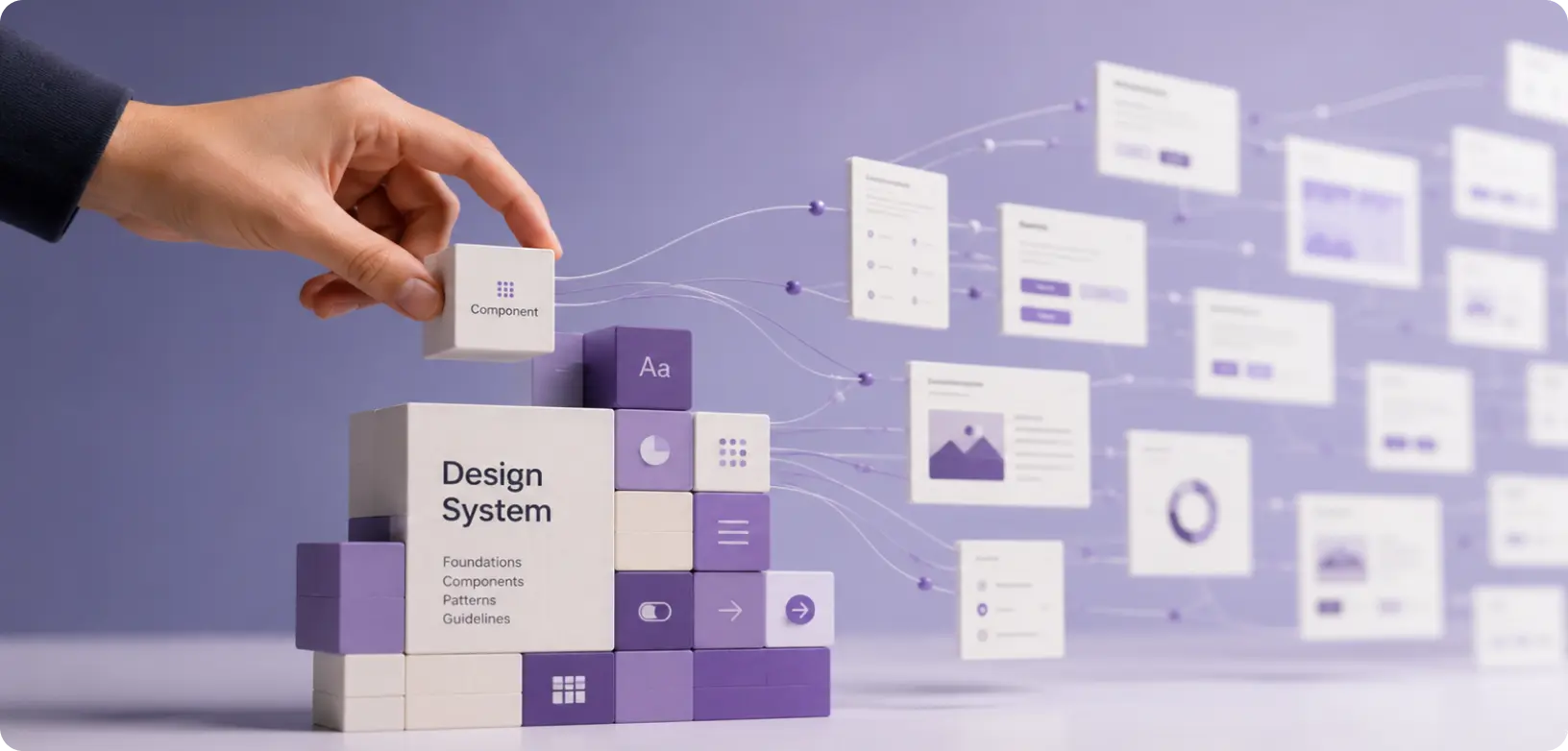
A design system is a shared set of standards, reusable components, and documentation that keeps a product consistent as it grows. Scaling one means moving from a single design token to a full library that many teams use. Strong governance and clear rules turn it into enterprise-wide adoption.
Introduction
Here’s a common problem many product teams face. One designer uses one shade of blue, another uses a slightly different one, and the developer chooses something else. Over time, the product ends up with multiple button styles, making it difficult to maintain a consistent user experience.
A successful design system is much more than a style guide. It includes reusable components, design tokens, documentation, and clear standards that help teams build consistent products as they grow.
YUJ Designs helps businesses create scalable design systems that give design and engineering a shared language. By bringing consistency to every stage of the product development process, we help teams collaborate more effectively, work faster, and deliver better user experiences.
In this guide, you’ll learn how to approach building a design system, from creating your first design token to driving adoption across teams. We’ll also cover common challenges, proven design system best practices, and practical steps to help your design system evolve as your business grows.
Understanding the Concept of a Design System
A design system is a shared set of guidelines that defines how a product looks and works. It includes reusable UI components, visual styles, and documentation that help designers and developers build consistent experiences across every screen.
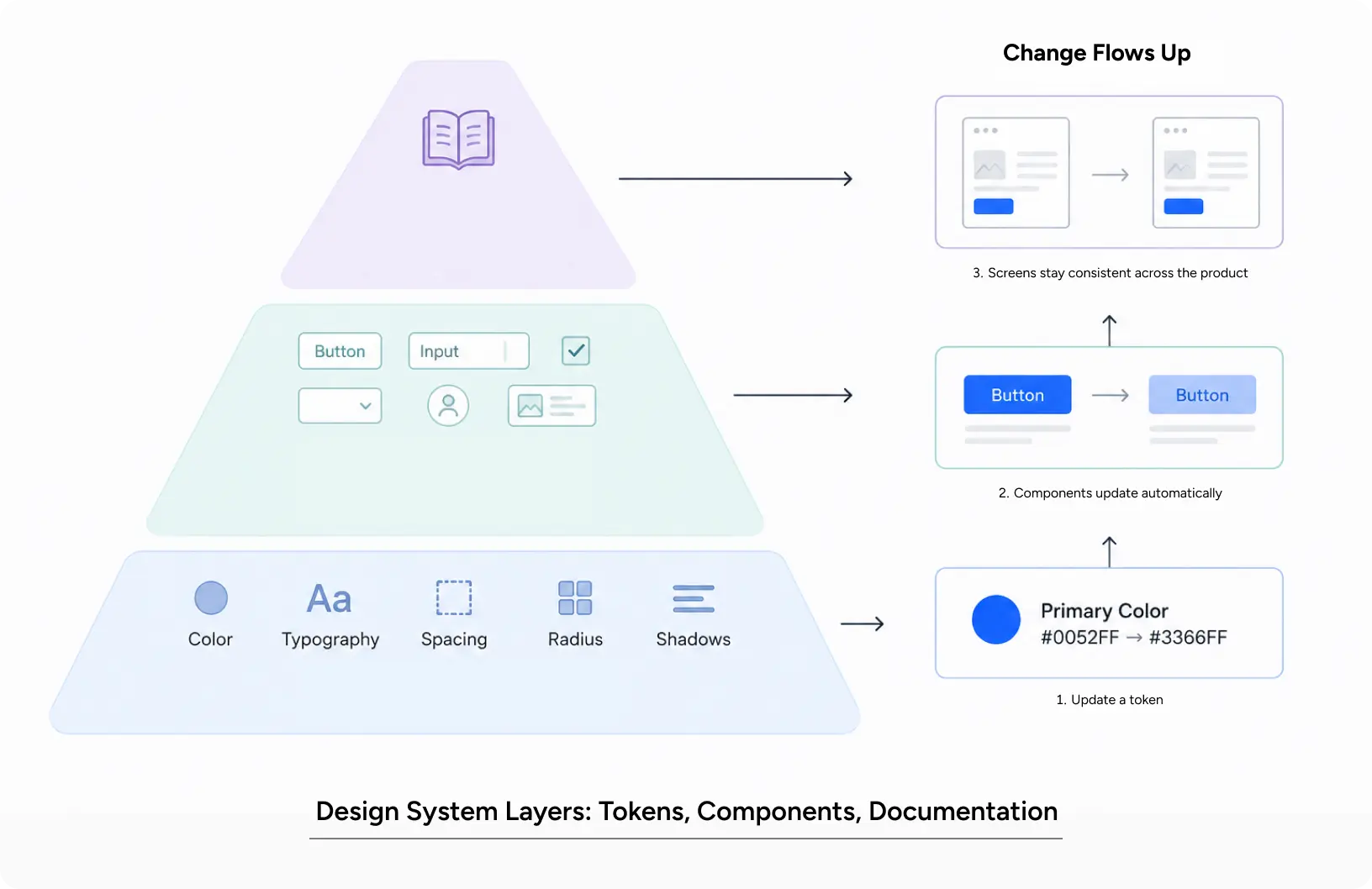
At the foundation of every design system are design tokens, which are reusable values for colours, typography, spacing, and other design elements. When a design token is updated, every component using it updates automatically, making changes faster and more consistent.
An enterprise design system builds on this foundation with a component library containing reusable buttons, forms, cards, navigation elements, and other UI components. Everything is supported by design system documentation, which explains how and when each component should be used so teams can work consistently as products grow.
Types of Design Systems
Not every design system needs the same scope. The right size depends on the company.
- Style guide: The simplest form. Colors, fonts, and logo rules. Good for a small site or a single product.
- Component library: A step up. Reusable coded and designed parts, ready to assemble. Good for a growing product team.
- Enterprise design system: The full scope. Tokens, components, patterns, governance, and documentation across many products. Built for scale.
Start small if you are early. Move toward an enterprise design system when several teams ship overlapping products and consistency starts to slip.
Core Principles
- Start with design tokens: Create design tokens first, then build components, and finally use those components to create pages. This bottom-up approach keeps the design system consistent and scalable.
- Treat the design system as a product: A design system should be maintained and improved over time. Assign clear ownership so it continues to evolve with the product.
- Document as you build: Keep your design system documentation up to date from the beginning. Clear documentation helps designers and developers understand how and when to use each component.
Following these design system best practices helps teams build a reliable system that stays consistent as products and teams grow.
Why Design System Matters in UX Design
A design system is not a cosmetic upgrade. It changes how fast teams move, how consistent the product feels, and how much trust users place in it. That is why building a design system has become a priority for serious product organizations.
Impact on User Experience
When every screen uses the same component library, users learn the product once and apply that knowledge everywhere. A button behaves the same way in billing as it does in settings. That lowers mental effort and reduces mistakes.
Consistency also supports accessibility. When a team encodes contrast, keyboard support, and focus states into the component library once, every product inherits them. You fix accessibility in one place instead of a hundred.
Impact on Business Metrics
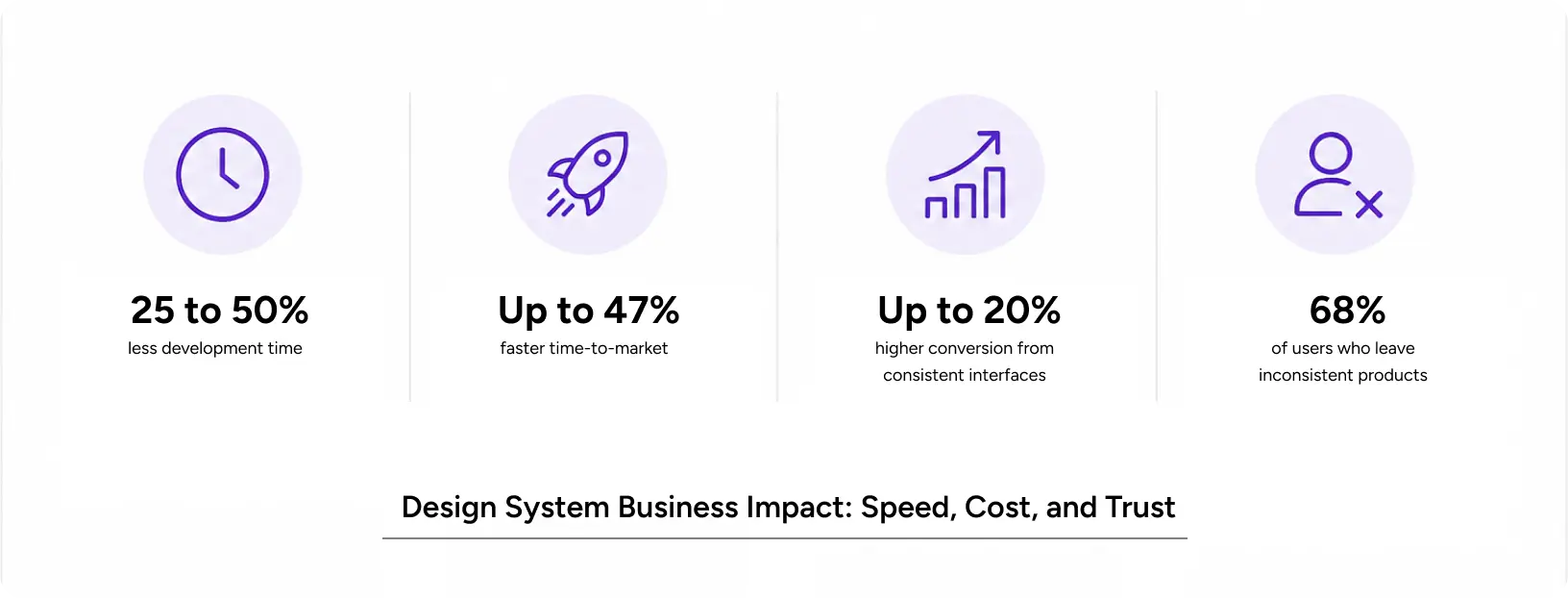
Design systems reduce development time by 25 to 50% and speed up time-to-market by up to 47%, according to industry research compiled by easy.bi. That is the time teams spend on new features instead of rebuilding old buttons.
Consistency also affects revenue. The Baymard Institute found that consistent interfaces can improve conversion by up to 20%. Adobe research reports that 68% of users abandon products that feel inconsistent. A well-run design system protects both trust and conversion at the same time.
Common Design System Mistakes to Avoid
Teams tend to slip in the same few ways.
- Building in a vacuum: Shipping a component library nobody asked for. If teams were not involved, they would not adopt it.
- Skipping documentation: A library with no design system documentation forces people to guess, so they build their own parts instead.
- No ownership: Without design system governance, the system drifts, breaks and goes unused within about 18 months.
How to Scale a Design System
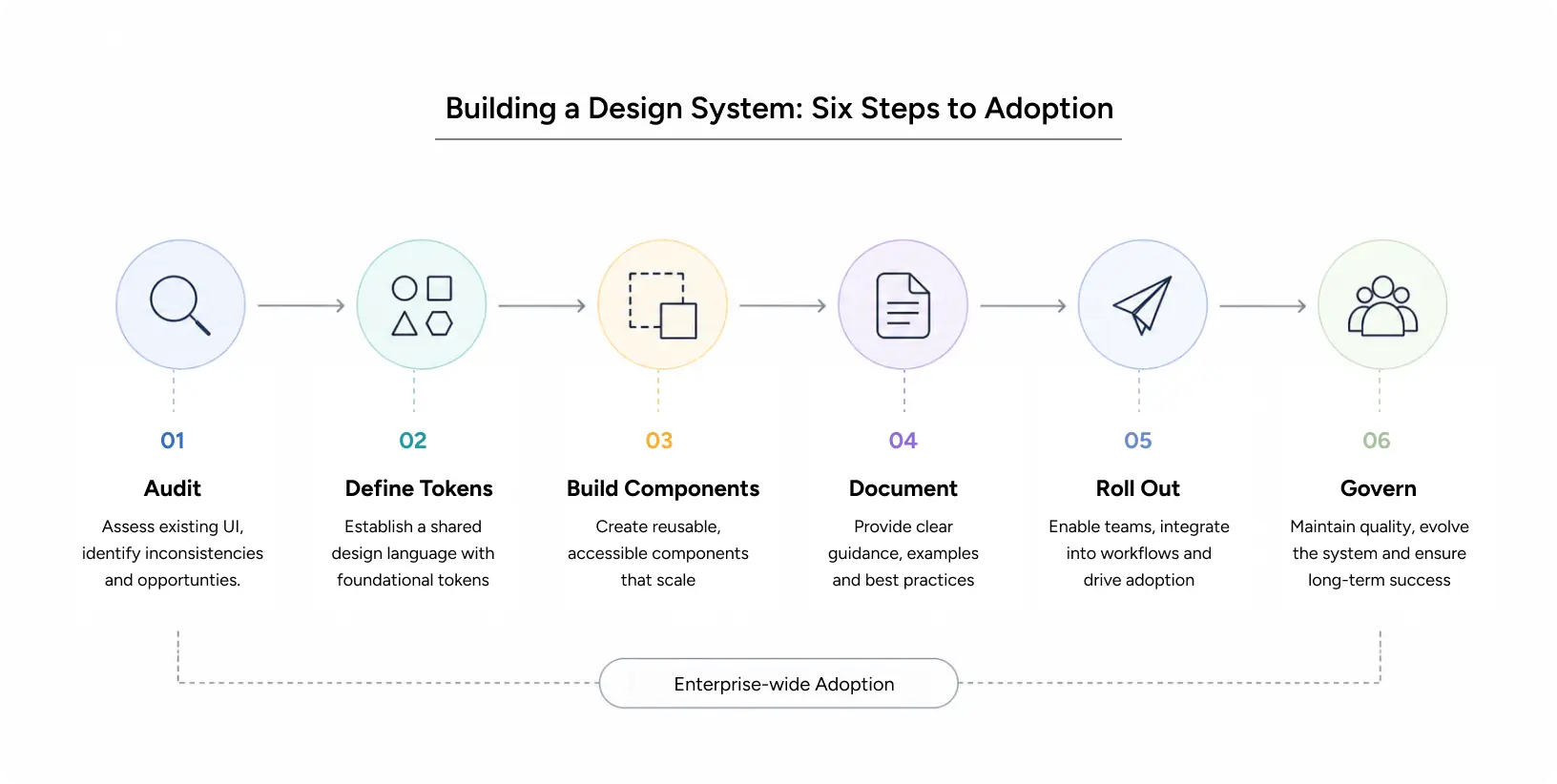
Scaling a design system is a process with clear stages. Here is the path Yuj Designs uses with product teams, from first token to full adoption.
Step-by-Step Workflow
- Audit what exists. Screenshot every button, form, and color in the product today. The mess you find is your starting point.
- Define your tokens. Set the core values for color, type, spacing, and motion. This first design token layer is the foundation.
- Build the component library. Turn tokens into reusable parts: buttons, inputs, cards, and navigation. Keep each part flexible.
- Write the documentation. For every component, explain what it is, when to use it, and when not to. This is your design system documentation.
- Roll out with support. Onboard teams, run training, and answer questions. Adoption is earned, not announced.
- Govern and iterate. Set up design system governance so contributions, reviews, and changes have a clear owner.
The last two steps decide everything. Building a design system is the straightforward part. Getting people to use it is the hard part.
Pro Tips from Yuj Design UX strategists
A few habits save months. Use semantic tokens, such as color.text.brand rather than blue-700, so themes and updates stay clean. Tie the component library in your design tool to the code components, so design and engineering never drift apart. Measuring adoption with a real number, not a feeling, is one of the most useful design system best practices we apply. Track the percentage of screens that use official components.
One more point. Secure a leadership sponsor early. The Sparkbox survey found that adoption is the top challenge for design systems, and executive backing is what keeps a system funded and staffed.
Tools & Resources
You do not need a huge stack. Figma handles tokens, components, and libraries, and Figma variables are now the most common source of truth for tokens. Storybook documents and tests coded components. A simple site or a tool like Zeroheight can hold the design system documentation. Pick tools your teams already use, so adoption stays easy.
Real-World Applications
A design system proves its value when one set of parts serves many products at once. Here is one example from Yuj Designs’ work in the US.
Case Study: CSSI / Boca West Club, Florida
CSSI came to Yuj Designs with five products that did not match: a website, a member portal, a web app, a native app, and an admin app. Each looked and behaved differently, which confused older members and slowed the admin team. The users struggled to find information and complete simple tasks.
Yuj Designs rebuilt all five products on one consistent layout, with shared components, grouped tasks, high-contrast text, and fewer clicks. This is what an enterprise design system looks like in practice. It produced clear business results: more conversions, better retention and satisfaction, lower administration costs, and stronger cross-marketing.
Read the full case study: CSSI Case Study
Conclusion
A design system is one of the highest-leverage investments a product organization can make. It starts small, with a single design token<, and grows into a shared component library that many teams rely on every day. The payoff shows up in speed, consistency and user trust. The systems that last are treated as living products. They have clear design system governance, current design system documentation, and a team that owns them. That is the difference between a system people use and a folder people ignore. If you are building a design system now, start with the tokens, involve the teams early, and plan for adoption from day one. Follow these design system best practices, and the system will keep paying off as the company grows. That is the expertise Yuj Designs brings to every engagement.

FAQs